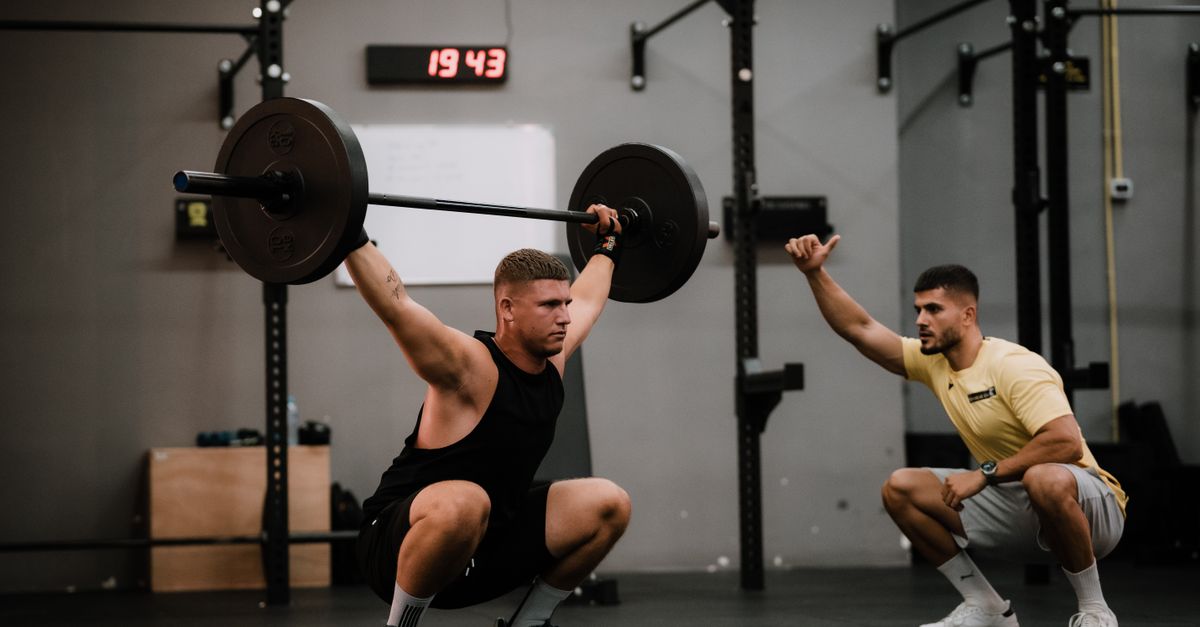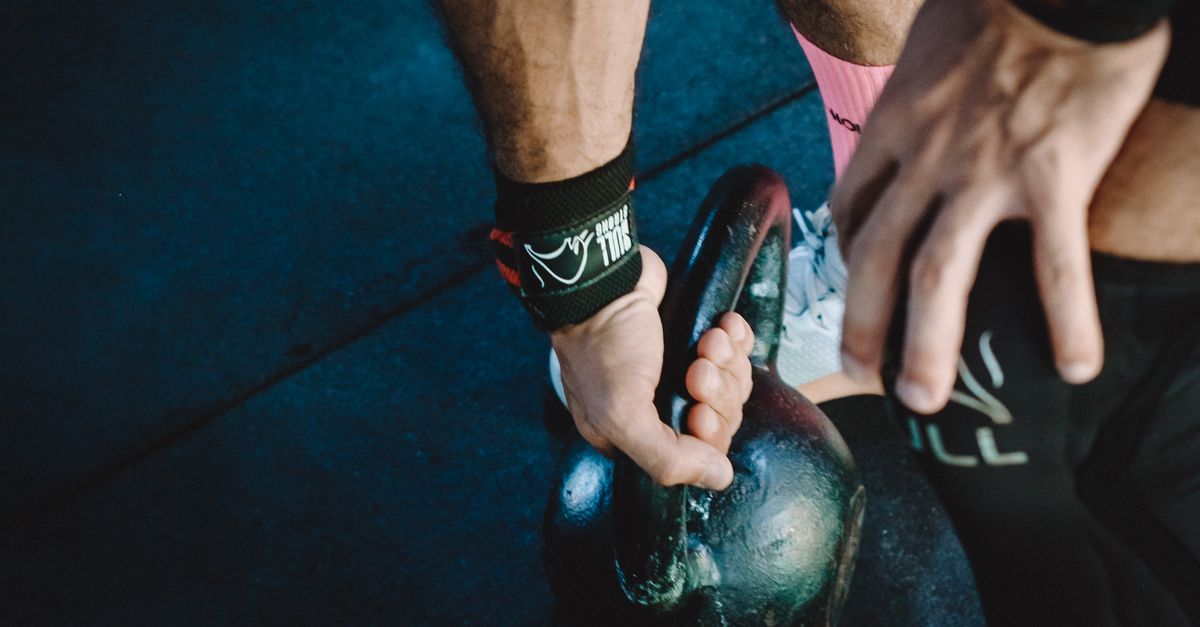

Most beginner programs fail for one boring reason: they start with the exercises the coach finds interesting instead of the ones a new athlete can repeat safely. This session is the opposite. Six movements, one warm-up and a progression rule that keeps the first eight weeks productive.
Start with a five-minute warm-up
A warm-up earns its place when it rehearses the session ahead. Run this short circuit twice before you touch a weight. It takes five minutes and it tells you how today actually feels.
- Hip hinge rehearsal — 10 slow good mornings with your hands behind your head.
- Squat to stand — 8 reps, knees tracking over the middle toes.
- Split-stance reach — 6 reps per side, holding the end range for two seconds.
- Shoulder circles and wall slides — 10 reps each, ribs down, no arching.
- Two easy minutes on a bike or rower, breathing through your nose.
The six-move full-body session
Train this session three times a week with at least one rest day between sessions. Rest 60 seconds between sets and 90 seconds between exercises. If you cannot finish a set with clean technique, the load is too heavy — stop the set, not the pattern.
- Goblet squat — 3 sets of 8. Hold one dumbbell at your chest, sit down between your feet, and stand by pushing the floor away. Keep the whole foot loaded.
- Romanian deadlift — 3 sets of 8. Hinge at the hips with a soft knee, let the weight travel down your thighs, and stop when your hamstrings tell you to. Your back stays flat the entire time.
- Push-up (or incline push-up) — 3 sets of 6 to 10. Hands under your shoulders, body in one line. If your hips sag, raise the hands rather than shortening the range.
- Single-arm row — 3 sets of 10 per side. Support yourself on a bench, pull the elbow toward your hip, and pause for one second at the top.
- Split squat — 2 sets of 8 per leg. Step back, drop the back knee straight down, and drive up through the front foot. Hold a rail if balance is the limiter.
- Farmer carry — 3 rounds of 30 seconds. Walk tall with a weight in each hand. This is the closest thing to a free core session you will find.
How to progress without adding risk
Beginners usually add weight too early and range too late. Reverse that order. In weeks one and two, add nothing: your only job is to hit the prescribed reps with the same tempo every set. In week three, add one rep per set. In week four, add the smallest available load increase and drop back to the original rep target.
The three-session rule. If a load feels heavy but your technique holds for three sessions in a row, it is time to progress. If technique breaks in any of the three, the weight comes down by one step — not your effort.
Write the number down. Progress you cannot compare is progress you cannot trust.
What week two should look like
By the second week, the session should feel familiar rather than exciting. You know the order, you know the rest periods, and you are spending your attention on positions instead of on remembering what comes next. That familiarity is the point — it frees you to notice the details a coach would notice.
Keep the whole session under 50 minutes. If it runs longer, you are resting too long, talking too much, or adding exercises that were never in the plan. When you can finish all three sessions of a week without excessive soreness, you are ready for the strength-focused progression in our form guide.